Gram Panchayat Balaghatta, Mandya District, Karnataka
Mandya Scalable Forest Restoration
Mandya Scalable Forest Restoration. From invasive threat to restoration opportunity.
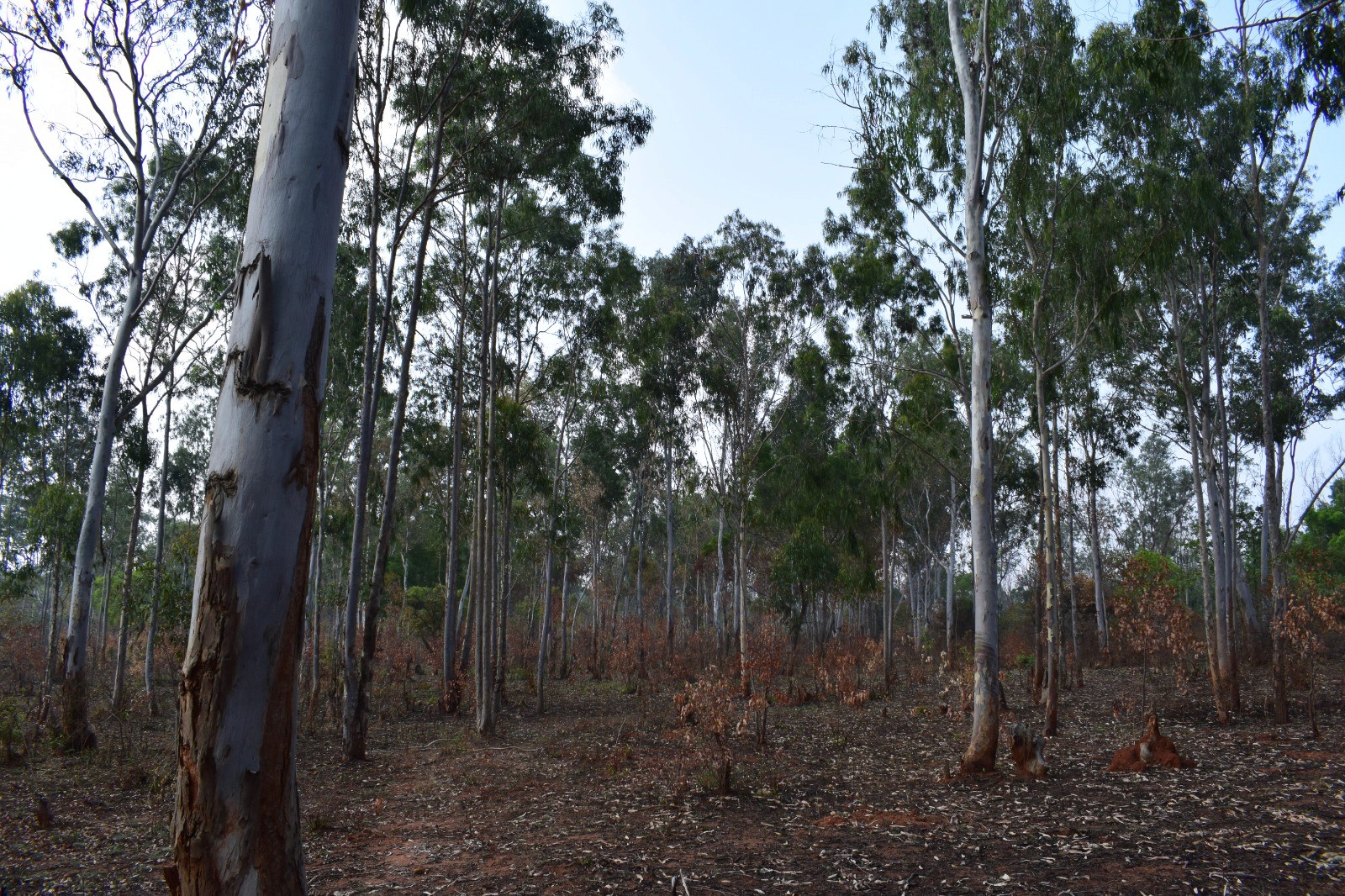
Location: Gram Panchayat Balaghatta, Mandya District, Karnataka
Programme: Forest restoration and bio-based circular economy
Initial pilot plot: 10 acres (4 hectares) of forest land, currently degraded by eucalyptus invasion, allocated by the local forest department and now under panchayat control
An Invasion Crisis: India loses roughly 15,500 square kilometers of natural land each year to invasive species, compounding Rs 8,30,000 crore in losses over the past 60 years and exposing 144 million people, farmland, and wildlife habitat to lasting harm. Climate change, land-use shifts, and biodiversity loss are accelerating this spread.
Eucalyptus, a Documented Threat: Eucalyptus covers approximately 7.5 million hectares in India, roughly 8% of its global coverage, with Karnataka among the worst-affected regions through groundwater depletion and land degradation. This led to a ban on eucalyptus on forest and most government land (post-2011, reinforced in 2017).
Local, Documented Impact: A Spring 2026 survey of 200 marginal farmers in Balaghatta confirmed the lasting impact of eucalyptus: indigenous fauna, unable to find food in the degraded forest, are forced into farmland, fueling human-wildlife conflict, crop destruction, livestock losses, financial fragility, and distress migration.

From Invasive Threat to Local Opportunity: The project transforms unsustainable eucalyptus plantations into sustainable forest-based bio-business ecosystems, creating a circular economy that turns environmental and economic threats into local opportunity, reducing distress migration through sustainable wages for farmers.
Phase 1: Removal and Revenue: Eucalyptus trees are removed from the pilot plot and processed into high-value by-products, closing the loop between invasive species removal and local economic value creation. Potential applications include eucalyptus oil exports (a USD 60 million/year global market), wood pellets (facing a projected 30-35 million tonne demand by 2027), co-firing for carbon policy, ash repurposed as cement aggregate, stump removal paired with cover crops for soil recovery, and direct wood-to-heat/steam feedstock.
Phase 2: Restoration and Transition: Replanting restores the landscape and biodiversity, improving water management and mitigating human-wildlife conflict. Fast-rotation species like moringa are planted as a transitional crop, generating early revenue and improving soil health while the forest matures.
Phase 3: Long-Term Diversified Economy: Oil-bearing fruit trees, planted for biodiversity and year-round harvest, become the forest's main long-term revenue source, supporting green kerosene or biodiesel production, oil cake use, and potential carbon and bio-credit certification.
Right-Sized, Farmer-Owned Governance: The project is built on a bottom-up governance model with farmers as majority shareholders in collective ownership. Means of production are small-scale, cost-effective, mobile, and adaptable, supported by regulated minimum guaranteed prices, shared equipment, and soft loans, avoiding financial vulnerability or distress migration.
Part of a Larger Vision: This pilot is part of a larger initiative, Panchayat of the Future, based in Gram Panchayat Balaghatta, designed as a replicable model for sustainable Panchayat transition across systemic, social, environmental, and economic dimensions.
